Continuing the cycle of care

MCS / At Home Hospital equipment uses the OxySafe thermal shutoff device on their oxygen equipment to protect patients from possible combustion situations.
The following are tips and thoughts to help keep you safe when using your oxygen.
MAKE YOUR HOME OXYGEN READY
Make sure that you have working smoke detectors.
Make sure you have a working fire extinguisher in your home.
If you move around the house with your oxygen, you may need more than one fire extinguisher. Better to have too
many than not enough in case of a fire.
Smoking can be very dangerous. No one should smoke in a room where you or your child is using oxygen.
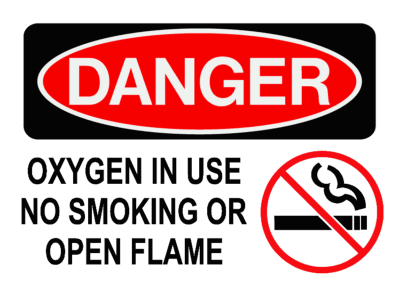
Put a NO SMOKING sign in every room where oxygen is being used.
In a restaurant, keep at least 6 feet away from any source of fire, such as a stove or fireplace.
Keep oxygen 6 feet away from: toys with electric motors, electric baseboard or space heaters, wood stoves or fireplaces,
electric blankets, hairdryers, electric razors, and electric toothbrushes.
Taking precautions to make you home oxygen ready is a very important step in the safety process.
USE CARE IN THE KITCHEN
You will need to be careful with your oxygen when you cook. Keep oxygen away from the stovetop and oven. Watch out for splattering grease because it can catch fire. Keep children with oxygen away from the stovetop and oven. Cooking with a microwave is okay.
OTHER OXYGEN SAFETY TIPS
Do not store your oxygen in a trunk, box, or small closet. Storing your oxygen under the bed is okay if air can move freely
under the bed.
Keep liquids that may catch fire away from your oxygen. This includes cleaning products that contain oil, grease, alcohol,
or other liquids that can burn.
Do not use Vaseline or other petroleum-based creams and lotions on your face or upper part of your body unless you talk
to your respiratory therapist or doctor first. Aloe vera and other water-based products, such as K-Y Jelly, are okay to
use.
Avoid tripping over oxygen tubing.Children may get tangled in the tubing.Taping the tubing to the back of your shirt may
help. Rolling the tubing up and carrying it with you to get it off the floor will help also.
Oxygen canisters should be kept at least 5-10 feet away from gas stoves, lighted fireplaces, woodstoves, candles or other
sources of open flames.
Do not use electric razors while using oxygen (these are a possible source of sparks).
Do not use oil, grease or petroleum-based products on the equipment. Do not use it near you while you use oxygen.
These materials are highly flammable and will burn readily with the presence of oxygen.
Avoid petroleum-based lotions or creams, like Vaseline, on your face or upper chest. Check the ingredients of such
products before purchase. If a skin moisturizer is needed, consider using cocoa butter, aloe vera or other similar products.
For lubrication or rehydration of dry nasal passages, use water-based products. Your pharmacist or care provider can
suggest these.
Post signs in every room where oxygen is in use.
Make sure that absolutely NO SMOKING occurs in the home or in the car when oxygen is in use.
Secure an oxygen cylinder to a solidly fixed object to avoid creating a missile out of the tank. This might happen if it was
accidentally knocked over and gas was allowed to escape.
Use caution with oxygen tubing so you do not trip over it or become entangled in furniture, rugs, etc..
Be familiar with the equipment and the safety checks established by the medical equipment provider. Keep their contact
telephone numbers, and the numbers for other emergency services, posted near a phone.
Do not try to repair broken equipment on your own. Request this service from the oxygen provider.
Make sure smoke detectors in the home are working. Have fresh batteries installed. Perform monthly checks.
Have a fire extinguisher available in the home as well (use type ABC).
Create and practice an escape and rescue plan in the event of a fire.
Notify the local fire department, gas and electric companies and telephone company when home oxygen therapy is started.
Request a "priority service listing." This is for those times when there is a power or telephone failure or repairs are
needed on any utility.
Do not change the setting on your oxygen without talking to your doctor first. Turning the flow rate up or down could put you
in danger.
Keep track of how much oxygen is in the tank, and order more in advance so you don't run out.
Do not drink alcohol or take drugs that relax you, such as sleeping pills or sedatives, while using oxygen. They can cause
you to breathe too slowly.
Call your doctor if you feel:Short of breath.Restless or confused.Very tired.Like you are not getting enough oxygen.
If you use a nasal cannula:Wash the nasal prongs with soap and water 1 or 2 times a week. Follow the maker's
instructionson on caring for your equipment. Replace the prongs every 2 to 4 weeks. If you have a cold or the flu, change
them when your symptoms pass.
Keep oxygen tanks upright and secured. Make sure they do not fall over and get damaged.
RESPECT OXYGEN
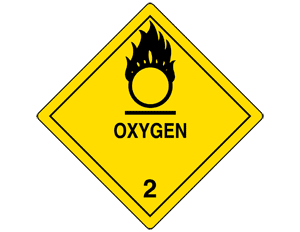
Oxygen is a non-combustible gas unlike gasoline. Oxygen is an accelerant and makes things burn much faster. Think of what happens when you blow into a fire -- it makes the flame burn bigger. If you are using oxygen in your home, you must take extra care to stay safe. The video below shows what can happen if an ignition source (lighter, cigarette, candle, etc.) is introduced to an oxygen enriched environment.